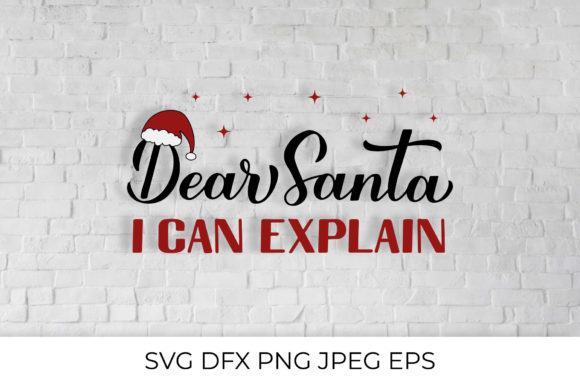
Dear Santa Quote: Festive Illustrations for Design
As a graphic designer who spends most of December juggling holiday campaigns for boutique clients and handmade businesses, I am always on the lookout for assets that strike the perfect balance between whimsy and professionalism. Recently, I pulled the Dear Santa I Can Explain Christmas Quote from my library to evaluate its potential for a real client project: a limited-edition holiday packaging run for a local artisanal cookie brand. My goal was to determine if this specific graphic design asset could elevate their seasonal marketing visuals without making the brand feel too juvenile or cluttered.
Upon first inspection, the mood created by this quote is undeniably playful yet nostalgic. It captures that specific moment of childhood mischief that resonates with adults just as much as kids. The visual elements feel hand-crafted, suggesting a style that fits perfectly within the current trend of "imperfect" modern design. For a client looking to soften their brand identity during the holidays, this illustration offers an immediate emotional hook. It doesn't just say "Christmas"; it tells a micro-story. This makes it an excellent candidate for projects requiring high audience engagement, such as social media graphics or exclusive product labels.
Real-World Application in Commercial Design
In the context of a real client brief, versatility is king. I tested how the Dear Santa I Can Explain Christmas Quote performed across various mediums. For packaging design, specifically the cookie boxes, the asset worked beautifully as a hero graphic on the lid. When paired with a clean sans-serif font for the ingredient list, it created a strong visual hierarchy that guided the eye naturally. The quote served as the decorative accent that gave the package personality, transforming a standard box into a giftable item.
Beyond physical products, I explored its use in digital spaces. For social media graphics, particularly Instagram stories and Pinterest pins, the illustration provided enough negative space to overlay promotional text while maintaining readability. It also translates well into a Cricut project; I can easily envision a small business owner using this for custom tote bags or holiday stickers. The lines are distinct enough to cut cleanly, making it a viable option for sublimation design on mugs or t-shirts. For those running an Etsy product shop, this type of digital product is gold because it appeals to the "funny holiday gift" demographic without requiring complex customization.
Ideal Placement and Strategic Usage
Knowing where to place an asset is just as important as the asset itself. The Dear Santa I Can Explain Christmas Quote shines in large layout areas where it can breathe. It works best as a focal point on product mockups, themed collections, or campaign visuals where the goal is to evoke a smile. It is particularly effective for printable design items like wall art or greeting cards, where the text is the primary feature.
However, caution is required. I would advise against using this in crowded layouts or at very small sizes, such as a favicon or a footer detail, where the intricate details of the lettering might blur. It is also not suitable for minimalist branding projects that require a stark, corporate look, nor should it be placed on complex backgrounds that compete with the text. In low-contrast designs, the charm of the quote gets lost. For professional corporate materials, unless the brand voice is explicitly playful, this might undermine visual trust.
Impact on Brand Consistency and Visual Hierarchy
Integrating a pre-made quote into a client's ecosystem requires a careful check on brand consistency. Does this Illustrations piece clash with the existing logo? In my cookie brand case study, the handwritten style of the quote complemented the brand's established script logo, reinforcing a handmade aesthetic. However, if the client uses a rigid geometric logo, this quote might feel disjointed.
The asset significantly boosts emotional appeal and recognition. People remember humor and relatability. By using a phrase that triggers a shared cultural memory, the design fosters a connection that generic "Happy Holidays" text cannot. Yet, one must ensure it doesn't overshadow critical information. In editorial design or web design, this quote should serve as a supporting brand element, not the entire narrative, unless the page is dedicated solely to holiday cheer.
Practical Designer Notes and Technical Checks
Before finalizing any client deliverable with the Dear Santa I Can Explain Christmas Quote, I run through a strict technical checklist. First, I test it in black and white to ensure the contrast holds up without color reliance. This is crucial for commercial design where printing costs might limit ink usage. I check contrast on both light and dark backgrounds; sometimes a drop shadow is needed to maintain legibility on busy patterns.
Previewing the asset at various sizes is non-negotiable. What looks crisp on a 27-inch monitor might look muddy on a mobile screen or a small sticker. I always place the design on real product mockups to see how it interacts with texture and lighting. If the file is a PNG design, I inspect the transparency edges for halos. If it is an SVG design, I check the vector editability to ensure I can tweak colors to match the client's specific hex codes.
Typography pairing is another key consideration. I compare how the quote sits next to serif, sans serif, and other display fonts. Often, pairing this playful quote with a structured sans serif creates a balanced, modern design feel. Finally, and most importantly, I confirm the commercial license. Using a design bundle or single asset for a client project requires clear rights to avoid legal issues down the line. Whether you are a content creator, a marketer, or a crafter, ensuring you have the right to use these design assets for profit is the foundation of a professional workflow.
In conclusion, the Dear Santa I Can Explain Christmas Quote is a robust tool for the right project. It brings warmth, humor, and a touch of nostalgia to small business branding and seasonal campaigns. When used with intention and technical precision, it transforms from a simple clipart into a strategic element of creative design that drives engagement and sales.